Psalm 117 and the Hallel
 |
| pinterest.com |
This Psalm is one of my favorite kinds of literary pieces. Short and sweet! The words of Psalm 117 are so simple that I believe any Judeo-Christian person should sing at least once in their life. However, one must wonder why there is such a short Psalm in a book as thick as the Bible? Let me show you the research I've done that explains the meaning of this small section of a beautiful Hebrew prayer.
1. It is actually more than a single Psalm
The first thing to note about this Psalm is that it is actually part the Hallel, a full Hebrew prayer-psalm of praise that is recited during many Jewish festivals and remembrance holidays. The prayer is composed of Psalm 113 to Psalm 118. The Hallel is not to be confused with the Great Hallel (also known as Psalm 136)
The second thing discovered from Barry Craig Davis is that "Psalm 117 is the final psalm of a trilogy of hallelujah (hy-vllh) colophon psalms that includes Psalms 115 and 116, as well."
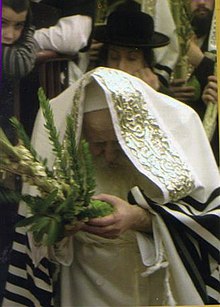 |
| wikipedia.com The Tosher Rebbe of Montreal, Quebec, Canada shaking the Four species during Sukkot while praying Hallel. |
2. Authorships
The authorship of the Hallel is unknown and hotly debated among Hebrew scholars. There is no name left for claiming the workmanship like the Psalms of David had, so even Jewish tradition can't seem to find good pointers to who the author of Psalm 117 and the rest of the Hallel might be. Sources at the Jewish Virtual Library show how there are believed authorship claims as early as Moses and as late as the post-exile prophets. There are even beliefs that the Levite priests began singing this song in the temple as a praise hymn to YHWH. Christine Hayes seems to confirm this confusion as she shows that many historians agree that the majority of the Psalms would have been gathered in the post-exile days of Jerusalem. What's odd about her lecture though is that she doesn't tackle the Hallel the same way she tackles the Song of Ascents or the Songs of David. She mentions that the Songs of Ascent would have been composed by the First Old Temple Order, so it is possible to consider that as the reason that the Hallel is in between these psalms and David's.
 |
| memegenerator.com |
3. The scholarly take on Psalm 117
Dr. Davis continues show us the connections of other Hallel psalms to Psalms to 117. As an example, "The 1 theme of Psalm 117--that God is to be honored--is carried over into Psalm 118 where the speaker in that psalm declares that God is to be offered thanks and His attributes and actions are to be declared openly." One thing that he also points out is that "The primary theme which is common to both Psalms 113 and 117 is that which relates to the glorifying of God. Both psalms begin and end with declarations of praise to the LORD. Psalm 117 looks backward to Psalm 113 which also concludes with a hallelujah (hy-vllh) colophon." Another way to connect all of the Hallel is to note that "both Psalms 114 and 117 indicate that the world is to recognize God’s greatness, particularly as He acts in relation."
4. A literary analysis of Psalm 117
As we looks through each verse in this Psalm, there are a few things I noticed (keep in mind that these are only from my perspective)
1. Praise the Lord, all nations!
Extol him, all peoples!
2 2. For great is his steadfast love toward us,
and the faithfulness of the Lord endures forever.
Praise the Lord!
Verse 1 is a simple cry for the ancient world that the Jewish people knew of to rejoice in YHWH. This idea is interesting as anybody that reads the Old Testament knows that Jewish history is filled with many battles and wars. I believe this verse can show us that the Jews were not a bloodthirsty people but rather people that obeyed what they believed their deity told them. Throughout Jewish history you can sympathy on the other nations from the Jewish people by the way that they spare some cultures from conquest during the days of Joshua. You can also see it in the way that the Jews of the Northern Kingdom assimilated with the Assyrians. This verse helps reveal from a personal author's perspective that the Jews were more concerned about their deity receiving praise rather than building an empire.
Verse 2 is special piece of the text that would reveal the character of YHWH to the readers of this text. The reading of things like "steadfast love" and "faithfulness" is something that is proclaimed from the text. You can see why the Jews would believe this based on their history according to the religious text. Many times Israel was quick to leave the rules of YHWH and run to another source of protection. YHWH did not seem to quit holding fast to the Jews though. While biblical history shows that they were given what they wanted (to show them what they wanted was bad), the protagonist of this story appears to be YHWH because he always brings reconciliation along with his discipline. It is in these moments of reconciliation that we can see why the Jews would proclaim of their deity's steadfast love and faithfulness. During several key moments the Jews should have been a nation in permanent captivity (or even worse wiped off existence), we see rather that their fate continues to progress, even to this day.
What is the Hallel's signifigance on our culture today?
The Jewish people still practice the singing of Hallel (including Psalm 117) today in their services at synagogues and during religious festivals. One way this is significant is the fact that the word "Hallel" is still used in our world today. Many hymnals and contemporary Christian words used the word "hallelujah" which simply a combination of the two Hebrew words "Hallel" which means praise and "Yah" (a shorter version of the name YHWH). Combine the two words and you have "Praise the Lord!" or "Hallelujah!" To see the importance of this word and the impact that it had on the Hebrew culture should make anyone (including myself) think again before disrespecting such a strong word of praise for a ethnic/religious group by shouting it when Alabama wins a football game.
Singing of Hallel via YouTube

Comments
Post a Comment